
Mission Statement:
"To advance through research, education and symposia, an increased public awareness of the Cape Fear region's unique history."

Wilmington to Canada:
Blockade Runners & Secret Agents
Cape Fear Historical Institute Papers
Overview:
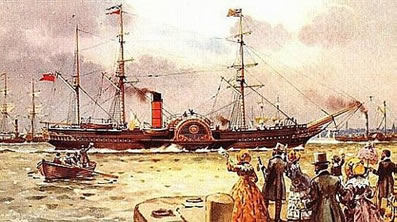
The port of Wilmington during the War Between the States
was a vital link that provided arms, munitions and
foodstuffs for the fledgling Confederacy.
During North Carolina’s second bid for independence,
Wilmington became the main loading point for government
cotton exports and the importation of supplies, despite
the Northern blockade, until its fall on January 16, 1865.
To illustrate the importance of Wilmington to the Southern
war effort and the immense volume of commercial traffic
of its port by 1864, Secretary of War Judah P. Benjamin
estimated that the annualized 1863 exports from the
city were $21 million, almost five times the total foreign
commerce of the entire State of North Carolina
just five years earlier.”
This vital link was important and long-lasting enough for
General U.S. Grant III, President of the US Civil War
Centennial Commission in 1961, to remark “(if it) is correct
…that between October 26, 1864 and January 1865 it
was still possible for 8,632,000 lbs of meat,
1,507,000 lbs of lead, 1,933,000 lbs of saltpeter,
546,000 pairs of shoes, 316,000 blankets,
half a million pounds of coffee, 69,000 rifles, and 43
cannon to run the blockade into the port of Wilmington
alone, while cotton sufficient to pay for these
purchases was exported, it is evident that the
blockade runners made an important
contribution to the Confederate
effort to carry on.”
An Effective Southern Response to the Blockade:
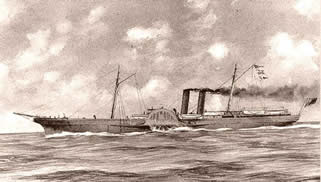
The ability of the runners to thwart the blockade can be best summed
up with Northern Admiral David Porter complaining to Secretary of
the Navy Gideon Wells in December 1864 that “the new class of
blockade runners is very fast, and (they) sometimes come in and
play around our vessels; they are built entirely for speed.” This is
how, by the last quarter of 1864, 23 out of 26 ships had
successfully run the strong blockade from Wilmington.
It should be mentioned too that the success of the blockade
runners was underscored by the Southern sympathies of
England and its colonies surrounding the United States.
The English upper classes “saw in the South a genteel,
romantic way of life threatened by industrial vandals,”
and a resentment of the increasing economic power
of the US which the North symbolized---“an arrogant
and encroaching people.” Britain’s governor of the
Bahamas, Charles John Bayley, was decidedly
pro-South and Bermuda’s governor H. St. George
Ord, “… was officially neutral but privately
predisposed toward Southern activities.”
The Canadian View of The War Between the States:
Canada saw the United States in the mid-1800's as a
dangerously aggressive neighbor which would eventually
attack Canada when strong enough, and after the outbreak
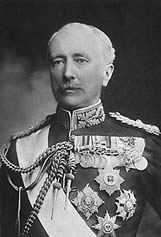
of war in 1861 Colonel Garnet Wolseley of the British
army in Canada argued that Britain should grant the
Confederacy diplomatic status. He envisioned that the
division of the United States into two separate republics
would “immediately strengthen the position of
Britain’s Canadian colonies.”
Many Canadians thought that if the South wanted to go
its separate way because of cultural and political differences,
that “surely this was no different than the desire of the
Thirteen Colonies who had declared independence
from Britain in 1776.
Seen in that light, the disintegration of the union was merely
a continuation of events begun some eighty-odd years earlier.”
This understanding of the war was underscored by
Canadian newspapers referring to the great conflict
as the “American Revolution.”
Wary of a powerful US Army, Canadian Minister of
Colonial Defence, John A. McDonald increased his country's
active militia to 100,000 men, and Britain developed a well-
detailed plan to deal with an expected invasion force
coming through the traditional Hudson Valley-Lake
Champlain route. In addition to seizing forts on the US
side of the border to delay an American advance,
a British expeditionary force of 50,000 men would add
to the existing 25,000 troops at Montreal.
Also, the British fleet under Admiral Milne would attack
US warships on the high seas as well as blockade northern
ports. Had Lincoln and Seward blundered into war with Britain
at the same time they were invading the American
Confederacy and losing the merchant marine to
privateers, the United States defeat would
have been devastating.
Canadian anxiety was increased when several American
newspapers called for the annexation of Canada in
December 1864; and Hastings Doyle, commander of
British troops in the Atlantic, publicized a conversation
between Northern Generals Grant and Meade
which intimated that Canada would be attacked after
French involvement in Mexico was dispensed with.
In February 1865, Canadian Cabinet Minister D’arcy
McGee was referring to the expansionist United States
when he said: “They coveted Florida and seized it; they
coveted Louisiana and purchased it…they picked a
quarrel with Mexico which ended by their getting
California …The acquisition of Canada was the
first ambition of (America)…Is it likely to be
stopped now, when she counts her guns afloat by
thousands and her troops by the hundreds of
thousands?” Thus, Canada was sympathetic to
the South and hoped for two smaller, and less
threatening, neighbors who might leave
British North America alone.
Ease of Entry to Canada:
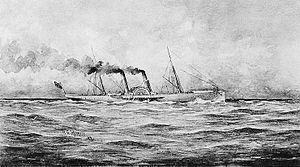
The port of Halifax, Nova Scotia was a familiar destination
for Confederate agents traveling to Canada, and most
would sail on a runner to Bermuda, then take passage on
the British mail ships that ran every two weeks to Halifax.
Bermuda was about 675 miles and a good 72 hours
of sailing time from Wilmington. Some runs from
Wilmington would bypass Bermuda --
in August 1864, the Old Dominion and the City of
Petersburg delivered 2,000 bales of cotton to Halifax
after a five-day sail up the coast and past blockaders.
Another runner, the Helen went to Halifax twice in late 1864.
Escaped Confederate soldiers were also passengers on
blockade runners, seven of whom booked passage
on the runner Armstrong in St. George’s Bermuda bound
for Wilmington in November 1864, after having escaped
a Yankee prison and made their way to Halifax,
Nova Scotia, then to Bermuda.
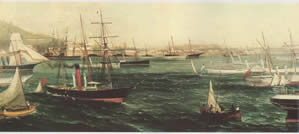
Among other commodities leaving and entering the port
on Wilmington were government officials of the Southern
Confederacy, as well as secret agents and banished
Northern peace advocates. Among the latter was Ohio
Congressman Clement Vallandigham, who was exiled to
the Confederacy for criticizing Lincoln and his pro-war
administration, sent to President Jefferson Davis in
Richmond, then to General William Whiting in Wilmington
to be put aboard the blockade runner Cornubia in
June 1863, destined for Bermuda.
From there, Vallandigham continued on to Canada,
ending up at the Clifton House Hotel in Niagara Falls
and running as a peace candidate for Ohio governor in 1863.
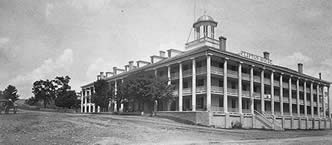
The Clifton House was a popular hotel situated on the edge
of the Niagara gorge at the foot of present day Clifton Hill
Road, now the site of a botanical garden. It began operation
in the 1830’s under Harmanus Crysler, and was one
of the most popular tourist hotels in Canada with many
famous visitors. According to the Lundy's Lane
Historical Society, antebellum boarders included:
"Jenny Lind, the Swedish Nightingale (who) stayed
there for three months in 1851 and sang often from
its balconies. Charles Dickens and his wife visited the
area for 10 days in the spring of 1841" and probably
stayed at the Clifton House.
"In September 1860. the Prince of Wales (later Edward VIII)
visited for five days...(and) his retinue stayed in "the little
cottages which fill the bountiful gardens at the Clifton Hotel.
The Prince visited the Clifton House during his stay and
is reported to have watched Blondin perfom his
rope-walking stunts from its colonnades."
Another guest at the Clifton House was Floride Clemson,
the grand-daughter of famous Southern statesman
John C. Calhoun. Floride visited the Falls in 1863, arriving
on the September 7th and spending time viewing the rapids
and gorge. She reported that the hotel "is a perfect den
of secessionists, most driven from New Orleans by
(Northern General Benjamin) Butler. The rest are English."
No doubt some Floride met were Confederate agents
and their many contacts.
Floride wrote her mother on September 12th that after
leaving Niagara:
"the next station to the Suspension bridge having burnt
down the night before, doing some damage to the track,
we had to go to a place called Tonawanda where we
waited a weary while, then struck back into the NY
Central railroad at Lockport."
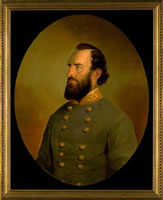
Future famed Confederate General Thomas J. Jackson
and wife honeymooned in Niagara Falls in the late 1850s
and perhaps stayed at the Clifton House.
The building burned on June 26, 1898, rebuilt in 1906,
then ravaged by fire once again in 1933.
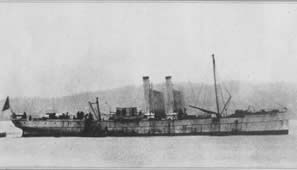
Privateers, Secret Agents and Liberating Southern Prisoners:
The Confederate privateer Tallahassee left Wilmington on
August 7, 1864, slipping past the blockaders for a devastating
raid on Northern merchant shipping.
Heading northward, the Tallahassee’s Captain John Taylor
Wood contemplated a raid into the port of New York after
capturing the Sarah A. Boyce near Sandy Hook.
“Panic swept the North” as no Northern warships were
available to defend the harbor. Deciding against the raid,
Wood took the Tallahassee up the northern coast, capturing
and destroying any enemy merchantmen that crossed his path.
On August 18th, the Tallahassee made port at Halifax for
coal and repairs, then proceeded southward, entering
Wilmington on the night of August 25th -- her toll
on Northern shipping for that voyage was 33
merchantmen, of which 26 were burned,
two were released and five bonded.
The Tallahassee would later become a blockade runner
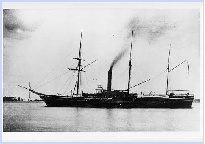
and renamed the Chameleon, captained
by John Wilkinson.
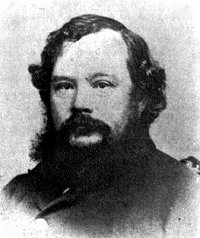 |
Captain John Wilkinson |
An early plan to have the Northern homefront feel the
effects of war occurred in mid-1863. Southern commandos
led by Robert D. Minor and endorsed by Secretary of the
Navy Stephen Mallory, were planning to capture
Northern ships on the Great Lakes and turn their
guns on Toledo, Cleveland and Buffalo in retaliation
for the destruction and burning of Southern cities.
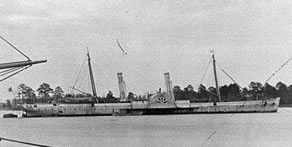
Minor and his 15 Confederate Marines departed
Wilmington on the blockade runner Robert E. Lee
under the command of veteran Captain John
Wilkinson on October 7, 1863. They arrived in
Halifax on the 16th where Wilkinson turned the
Robert E. Lee over to another captain, but quickly
found that the plan had been discovered and
announced in Northern newspapers. The plan
was abandoned and the party returned South.
At the urging of President Davis, the Confederate Congress
passed a Secret Service Act in 1864 to provide $1 million for
“clandestine operations,” most of it planned for use in Canada.
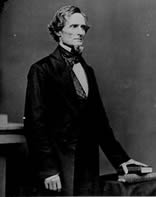
Davis dispatched commissioners, agents and funds to Canada
for an effort to aid Southern prisoners in their escape from
Northern prisons, and take advantage of the political unrest
and Midwesterners (and New York) opposition to the war.
In April 1864, Davis sent Clement C. Clay of Alabama,
James Holcomb of Virginia, Captain William Cleary of Kentucky
and Jacob Thompson of Mississippi to Canada for this purpose,
leaving Richmond on May 3rd for Wilmington, and departing
on the blockade runner Thistle for Canada on May 6th. These
were very distinguished Americans aboard the Thistle,
Thompson being President Buchanan’s Secretary of the
Interior, and Clay serving two terms as a United States
Senator from Alabama in the late 1860’s. The runner Thistle
was escorted by the ironclad CSS Raleigh, which turned
south to engage blockading ships whilst the Thistle ran
north for a spell, then eastward to Bermuda. It was
only through the extraordinary efforts of Captain John
Pembroke Jones, commanding the Raleigh, in keeping
the blockaders distracted that the mission was not
captured off Wilmington.
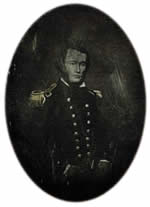
Captain John Pembroke Jones
Once in Canada, the commissioners went to work, with
Holcombe in particular establishing “a network of agents
in Montreal, Toronto, and Windsor (across from Detroit),” to channel escaped Southerners toward Halifax, and thence to Wilmington.
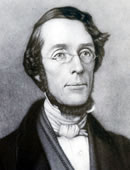
This excerpt from a letter to the Secretary of State from
Commissioner Holcombe reveals his plan::
Clifton House, Niagara Falls, Canada West, August 11, 1864
To: Honorable Judah P. Benjamin, Secretary of State, CSA:
Sir---Since my last dispatch I have visited all the points in
Canada at which it was probable any escaped (Southern)
prisoners could be found. I have circulated as widely as
possible the information that all who desired to return to
the discharge of their duty could obtain transportation
to their respective commands within the Confederacy.
For this purpose I have made arrangements with reliable
gentlemen at Windsor, Niagara, Toronto and Montreal
to forward such, as from time to time may require this
assistance, as far as Halifax, from which point they will
be sent to Messrs. Weir & Company to Bermuda. The system
thus organized will provide for the return of any ordinary
average of escaped prisoners.
With the highest respect, etc.,
James P. Holcombe
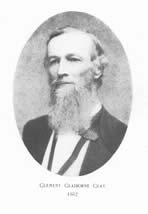
Clement Clay posted himself at St. Catherines, a small town
not far from Niagara Falls on Lake Ontario. From here he
conducted his efforts to effect negotiations for peace and
“making overtures…to important men in the North.”
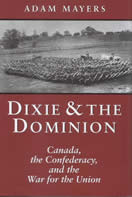
As Adam Mayers states in his “Dixie and the Dominion,”
“there were at least three parallel operations being run
in Canada,…Thompson focused on an uprising in the
Northwest (and) Holcombe and Clay wanted to return
escaped prisoners to the South and mount an anti-war
campaign by influential men in the North.”
The Lake Erie Raid:
In 1864, the agents in Canada were planning the escape of
Southern soldiers imprisoned at Johnson’s Island on Lake
Erie near Sandusky, Ohio. The plan was to overpower the
crew of the USS Michigan, the lone US warship on the Great
Lakes which guarded the prison and release the nearly
3000 prisoners to create a small, but formidable army
deep in enemy territory.
Among the Confederate agents in Canada was Lt. Bennett Young
of Kentucky, who would later lead the attack on St. Albans,
Vermont and burn several buildings on October 19, 1864.
Young was a cavalryman with John Hunt Morgan, captured
in July 1863 and imprisoned at Camp Douglas near Chicago.
Young escaped from prison and made his way back to the
Confederacy via the St. Lawrence River to Halifax, then to
Bermuda, and then to Wilmington aboard a blockade runner.
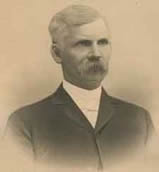
Bennett Young
Confederate Secretary of War James Seddon had sanctioned
Young’s plan of action in Canada, and ordered him return to
Canada and scout the towns along the American border,
feeling free to sack and burn those most exposed. Seddon
continued, “It is but right that the people of New England
and Vermont especially, some of whose officers and troops
have been foremost in these excesses (in the South), should
have brought home to them some of the horrors of such warfare.”
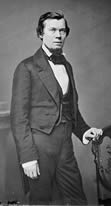
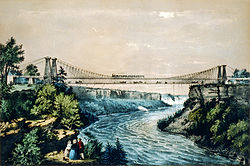
Jacob Thompson and his agents were busy rounding up escaped Confederate prisoners in the North and found the Niagara region a convenient headquarters. The old Suspension Bridge at Niagara Falls
was a well-traveled entry into New York for reconnaissance missions,
and agents were aided by Southern-sympathizers in Fredonia,
and Dunkirk, New York. Agents met in the Genesee Hotel in
Buffalo to plan the John’s Island operation and also used nearby
Port Colborne in Ontario as a staging area.
It is important to note that New York had those sympathetic
to the Southern cause of independence who might assist the
Confederates. As an example of this, on April of 1861
Democratic leader and New York Assemblyman
Francis Kernan stated that:
"I am opposed to, and I trust the National Government will
not attempt to carry an aggressive war into the Southern States.
Such a war will neither preserve or restore the Union . . .
If, we cannot adjust our differences now by concessions
which will make us one people, is it not better
to separate peaceably?"
Unfortunately for the South, the Johnson’s Island liberation
plans went awry with the Confederate agents betrayed by one
of their small group, Northern authorities were alerted,
and additional Northern troops were sent to the prison as
a precaution. A further difficulty facing the Confederate
agents was Lincoln’s infiltration of Democratic political
groups who longed for peace. An immediate result of
the failed Fort Erie Raid and the ease with which the
agents had used the Niagara region as a base, was a
regiment of Northern troops being sent to Buffalo
to effectively patrol the border.
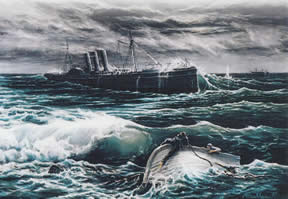
On his return to the South from Halifax in late September 1864, Confederate Commissioner Holcomb ran the blockade into
Wilmington aboard the Condor which went aground on the
burning hulk of the runner Night Hawk from Bermuda,
destroyed earlier that night at the entrance to New Inlet Bar.
While Holcomb made it ashore, his companion and famed
Confederate spy Rose O’Neal Greenhow was lost when the
lifeboat capsized. She was carrying $2,000 in gold and sank
with her money recently acquired from the sale of her book,
“My Imprisonment and the First Year of Abolition Rule
at Washington,” published in England. Once safely ashore,
Holcomb continued his journey to Richmond to report to
President Davis on the South’s espionage efforts in Canada.
Peace Conference at Niagara Falls:
While the escape attempt at Johnson Island was planned, others
sought peace between North and South. President Jefferson
Davis authorized George N. Sanders of Kentucky and
commissioner Clement Clay to conduct a peace conference
with Northern authorities in July 1864, with Lincoln sending
his Chief of Staff, John Hay in his behalf. New York Tribune
editor Horace Greeley endorsed the peace talks and wrote
Lincoln “our bleeding, bankrupt, almost dying country longs
for peace, shudders at the prospect of fresh conscription,
of future wholesale devastation and new rivers of blood.”
The negotiations took place at the famous Clifton House Hotel
and came to naught as Hay pressed Lincoln’s demand for
no political independence of the South, and the abandonment
of slavery by federal edict. Davis would accept no terms
other than full political independence.
Thompson’s Desperate Last Plan:
With the failures of Confederate attacks at Camp Douglas and
Johnson’s Island, Commissioner Jacob Thompson sensed the
tightening of Canadian security measures against Confederate
agents as the US government pressured Canada. But Thompson
had one more plan to put forward in the last days of the
Confederacy -- and it involved Lee’s army breaking out of
its defensive position at Richmond and Petersburg,
and moving north.
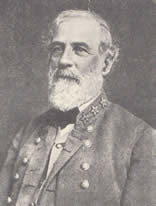
Lee would threaten Washington first, move westward to
capture Pittsburgh and Wheeling to establish a base, then
send units to free the 100,000 prisoners held in various
Northern prisons. Lt. John Headley, one of the agents
in Canada, wrote after the war that the plan seems bizarre in
hindsight, but at the time it had valid appeal.
He wrote that “the South was exhausted…and that
nothing could be lost and everything could be gained.”
He surmised that though the South would be at the mercy
of the enemy, the Northern people and property would be
equally in the power of the Confederates, who would
be unopposed marching westward. With the South’s armies
collapsing and Lee against any plan that would perpetuate
the slaughter, the plan came to naught.
The War Ends For Captain Maffitt:
In mid-January 1865, legendary Wilmington blockade runner
Captain John Newland Maffitt was in command of the Owl,
and had just slipped into the Cape Fear River when local
patriots informed him of the fall of Fort Fisher.
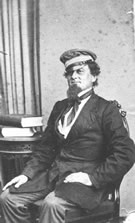
A swarm of Northern blockaders then descended upon the
Owl with “ inexperienced enemy seamen firing wildly and in
all directions,” and according to Maffitt, “this was attended
with unfortunate results to the Federals.” Maffitt then sailed
to Nassau for repairs, and ran the blockade into Galveston,
Texas in early May. In search of Maffitt was Lt. John
Pembroke Jones who had sufficient Confederate funds
to purchase two steamers to ferry supplies to the
beleaguered Lee in Virginia. But after learning of Lee’s
capitulation in April, Maffitt set sail for Halifax to coal,
and leaving Lt. Jones there, went on to exile in
Liverpool, arriving on July 14, 1865.
Southern Exiles at Niagara on the Lake:
After Lee’s surrender in Virginia and Gen. Joseph E. Johnston’s
capitulation in North Carolina, many high Confederate officials
were arrested by the Radical Republicans and some fled the
country to watch the postwar period unfold from afar.
Many went to Mexico and Brazil to become “Confederados,” some
like Judah P. Benjamin (who spent some childhood years in
Wilmington) went to England, and some to Canada. The latter were
found in Montreal, Toronto, and later Niagara on the Lake which
was situated at the mouth of the Niagara River, and directly across
from Fort Niagara.
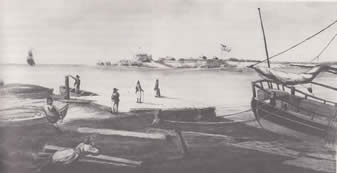
The small town, originally named Newark, saw much activity during
the War of 1812 when nearby Fort George was captured by
American forces under General George McClure. On 10 December
1813, McClure’s men set fire to the town before abandoning
the fort to advancing British forces, destroying eighty homes
and “about 400 women and children were rendered homeless.”
As Newark had been the early capital of Upper Canada and to
every loyal Canadian it symbolized the early struggles of the
province and the names of Simcoe and Brock---its destruction
(and the burning of York’s (Toronto) public buildings earlier)
infuriated the British and led to the retaliation burning of
Washington, DC in August 1814.
The war’s end brought General John C. Breckenridge and his
family to Toronto first, and then Niagara on the Lake in May 1866.
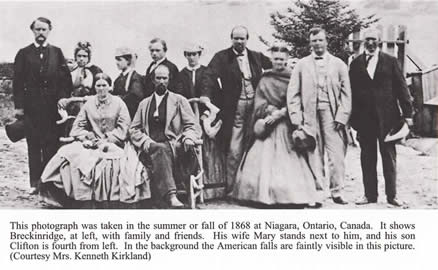
Breckenridge served as vice president of the United States under
James Buchanan 1856-1860, was a candidate for president in 1860
on the Southern Democratic ticket, (received nearly 850,000 votes)
and a Major General in the Confederate service.
He and his family rented a small home on Front Street overlooking
Lake Ontario for twelve dollars a month. Immediately opposite the
home on the New York bank of the river was Fort Niagara.
Breckenridge gazed at the fort often, “with its flag flying to refresh
our patriotism.” To him it seemed both a symbol of the Founder’s
republic he tried to save, as well as a taunt that threatened arrest
should he cross the river.
One who frequently visited the exiled Southerners was Lt. Colonel
George T. Denison, commander of the Canadian Governor-General’s Body Guard, another was General Breckenridge’s “beloved old
adjutant,” J. Stoddard Johnston of New Orleans. Johnston was the
nephew of General Albert Sidney Johnston, and also served as
an aid to Generals Bragg and Buckner.
General George Pickett was also in Canada, though perhaps
living in Toronto. Soon to join the ex-vice president at Niagara on
the Lake were Confederate commissioner to England James M.
Mason, General’s Jubal Early, John McCausland, Richard Taylor
(son of General Zachary Taylor), John Bell Hood, Henry Heth,
William Preston; and a host of lesser officers and their families.
They often commiserated in the shade at Mason’s home,
“discussing military matters and the practice of the
soldiers art under the modern conditions inaugurated”
by the War Between the States.
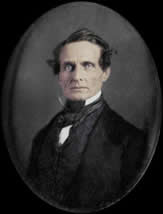
President Jefferson Davis arrived in Toronto aboard the steamer
Champion on May 30th, 1867, met by several thousand well-
wishers at the foot of Yonge Street. He boarded the Rothesay
Castle at 2PM for the journey across Lake Ontario to Niagara
on the Lake. He was met there by the Town Council along
with General Breckinridge and Mason.
Upon leaving the wharf, Davis looked across the river to
Fort Niagara with the Stars and Stripes floating over it.
He turned to his former commissioner and exclaimed:
“Look there Mason, there is the gridiron we have been fried on.”
Davis enjoyed supper at the Mason’s home on Gage Street,
and a band later came to the house and played “Dixie” for the
President. After coming to the porch to enjoy the music,
he told the small crowd that “I thank you for the honor you
have shown me. May peace and prosperity be forever
the blessing of Canada, for she has been the asylum of many
of my friends, as she is now an asylum for myself.
I hope that Canada may forever remain a part of the
British Empire and may God bless you all…”
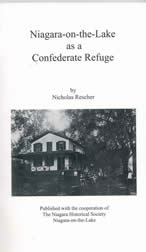
Davis stayed in Niagara on the Lake, according to author
Nicholas Rescher, “until his 59th birthday on June 3rd, when he
returned to Montreal via Toronto and accompanied by Mason.
After he had returned to Montreal, the Niagara Mail amply
reciprocated Davis’ cordial sentiments (with) “It is a subject
of pride to Canadians that they can offer the hospitality of the
soil and the shelter of the British flag to so many worthy men
who are proscribed and banished from their homes for no
crime at all, viz. to assert the right of every people to choose
their own form of government.”
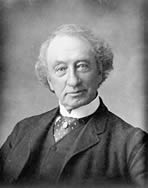
“What A Brave Fight They Have Made”
A fitting tribute to the Southerners who fought for their independence
in 1861 through 1865 came from Canadian leader John A. McDonald during the Canadian Confederation debates.
McDonald told an audience that “they could make a great nation,
capable of defending itself, and he reminded them of “the gallant
defense that is being made by the Southern Republic---at this moment
they have not much more than four millions of men---not much
exceeding our own numbers---
yet what a brave fight they have made.”
Bibliography:
Rogues and Runners, C.L. Deichmann, Bermuda National Trust, 2003
Guns For Cotton, Thomas Boaz, Burd Street Press, 1996
Dixie and the Dominion, Adam Mayers, Dundurn Group, 2003
Gray Phantoms of the Cape Fear, Dawson Carr, Blair Publisher, 1998
Breckenridge: Statesman, Soldier, Symbol, W. C. Davis, LSU Press, 1974
Running the Blockade, Confederate Veteran Magazine, 9/ 1916
CSNavy Research Guide, Thomas T. Moebs, Moebs Publishing, 1991
Niagara on the Lake-Confederate Refuge, N. Rescher, NAP 2003 Secession Movement, Middle Atlantic States, W.C. Wright, AUP, 1973 A Rebel Came Home, McGee/Landers editor, USC Press, 1961
©2006 Cape Fear Historical Institute