Mission Statement:
"To advance through research, education and symposia, an increased public awareness of the Cape Fear region's unique history."

Distinguished Wilmington Visitors
Cape Fear Historical Institute Papers
The city of Wilmington was honored by the visit of many
distinguished Americans in the early days of the republic, and
well into the 19th century. If one were to walk one or two
blocks in any direction from the intersection of Front and
Market Streets, they would find themselves walking on or
near the same paths tread by Washington, Monroe, Calhoun,
Henry Clay, Webster, Alexander Stephens, Jefferson Davis,
Bragg, Beauregard and many more.
 |
Washington |
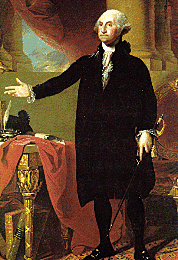
George Washington:
It was during George Washington’s Southern Tour on
April 24, 1791 that he came to Wilmington and was escorted
into town by the Wilmington's Light Horse Guards. After spending
the previous night at Robert Sage's Inn on the New Bern Road
just south of today's Holly Ridge, Washington' party was met
by the Guards at Rouse's Tavern, about eight miles north of
town (today's Ogden) on the New Bern Road. This was the
site of a skirmish between about 18 patriots under Major
James Love and about 65 British soldiers under Major
James Craig in March 1781. All but a small boy escaped
from that battle, with Craig victorious.
Washington’s visit “was a grand occasion for Wilmington.
The artillery boomed forth a greeting of many guns, and great demonstrations of welcome for the general were offered by
the citizens. On the next day…there was a procession about
the town, and a great dinner was served in honor of the
distinguished guest. In the evening the town was illuminated
by bonfires, and a brilliant ball was given, at which the dames
and young ladies, with the gentlemen of the town, were
present in their choicest costumes.” This “brilliant ball”
was given at Assembly Hall, then on Front Street between
Orange and Ann Streets.
General Washington was the guest at the residence of
Mrs. John Quince on the southeast corner of Front and
Dock Streets (now gone), "which that lady put at his service, it
being one of the best in the town. The next day he was entertained
at a large dinner by the gentlemen of the town, during which
there was more artillery firing, and at night a general
illumination and a grand ball (Bellamy)."
The day after Washington departed Wilmington, escorted by
the Light Horse Company for many miles, to continue his
Southern Tour. As the Boundary House at the
North Carolina-South Carolina line had fallen into disuse for
public lodging, Washington was the guest of Mr. William Gause, Jr.
at his home in Brunswick County on 27 April. The The Gause
home was just to the south of today’s Ocean Isle Beach bridge.
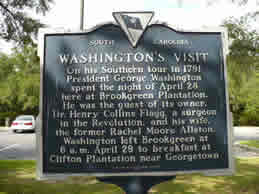
Washington then continued his tour into South Carolina
passing through present-day Myrtle Beach and spending
the night of 28 April with Revolutionary War surgeon
Dr. Henry Collins Flagg and wife, Rachel Moore Allston
Flagg, at Brookgreen Plantation, near Murrells Inlet.
Washington left Brookgreen at 6AM on the morning of
29 April to breakfast at Clifton Plantation near Georgetown.
General Benjamin Smith:
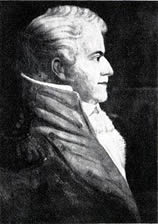
Wilmington became the home of General Benjamin Smith
in the early 1800’s, a Revolutionary War leader and owner of
Belvedere plantation in Brunswick County, and earlier owner of Orton plantation. Smith spent much of his time in Wilmington at his home
on Dock Street near the northwest corner of Second Street, later
the residence of Dr. John D. Bellamy.
General Smith represented Brunswick County
in the General Assembly, and served as Major General of State
Militia from 1794-1810, when he became
governor of North Carolina.
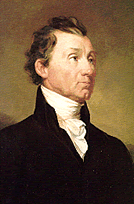
James Monroe:
President James Monroe and then-Secretary of War
John C. Calhoun came to Wilmington on 12 April 1819 after
being met by the Wilmington Light Horse volunteers
commanded by Col. Thomas Cowan at Scott’s Hill,
about 12 miles north of town. They entered town on the
New Bern Road, the town boundary then being Fifth Street,
thence up Front Street to the Wilmington Hotel
and the Grand Reception. One of the toasts drunk at dinner
was “prosperity to the commerce of the Cape Fear.”
The reception included a river tour down to Smithville and
back aboard the steamer Prometheus. Both the President
and Secretary examined the salt works on the sound at
Wrightsville, and dining with citizens
at the Wilmington Hotel.

The Steamship Prometheus on the Cape Fear River
The President was the guest of Robert Cochrane at his
Second Street home between Chestnut and Mulberry.
Secretary of War Calhoun and his wife lodged as guests
of Dr. A.J. DeRossett at their home on the corner
of Third and Market Streets.
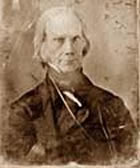
Henry Clay
Henry Clay made a visit to Wilmington supposedly in the interest
of his presidential campaign, delivering a speech from the balcony
of Captain Samuel Potter’s new home at 211 Market Street on
April 12th, 1844, after being introduced by Governor William Dudley. “The wide street, for a considerable distance on each hand, was
one dense mass of human beings…Never was such a scene,
or anything approaching it, witnessed in Wilmington,”
wrote James Sprunt.
A public banquet was later given in his honor in the front yard
of John Walker’s home on Princess Street, immediately in the
rear of the Potter residence. It was here that Alexander H.
Stephens of Georgia, later Vice President of the American
Confederacy, delivered an address to the assembly. The Potter
house stood on Market Street, midway between Front
and Second Streets.
Clay was also entertained at the residence of former governor
Edward Dudley at 400 South Front Street; and thanked the
welcoming crowds at General Owen's front porch on Front Street
beneath a white "Henry Clay" banner with gold lettering. While
here, Clay lodged at the residence of Mrs. Joseph Hill at the
corner of Front and Dock Streets, where
Washington was entertained in 1791.
Clay departed for Raleigh where he on April 17 "expressed for
publication the opinion that [Texas] annexation would invite war
with Mexico, and on other grounds that it was inexpedient to admit
Texas into the Union. [He] declared annexation was not
demanded “by any popular expression of public opinion.”
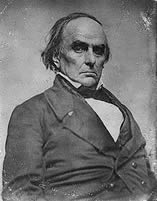
Daniel Webster
In May, 1847, Daniel Webster and his family were guests at the
home of Governor Dudley. They were greeted by a large reception committee which traveled to Rocky Point to meet him and offer the courtesies of the town. Webster was reportedly very impressed with
the elaborate entertainment provided by Governor Dudley, and
many Wilmington citizens called on him while here.
It is said that the governor introduced him to his favorite dish,
tripe, which Webster had never eaten before, but with which he
was very much pleased. A Colonel McIlhenny, a frequent guest
of Governor Dudley, said he was much impressed by the great
size of Webster’s head, and his fancy for the governor’s Madeira.
After drinking all of the dining room supply, Mr. Webster laid an affectionate hand upon the colonel’s shoulder and said, “Young
man, show me where the governor keeps that wine.”
When Webster departed Wilmington, he left by steamer for Charleston, leaving a very vivid impression upon the town and its people.
A later owner of the same home, James Sprunt, hosted
President William H. Taft on November 9, 1909.
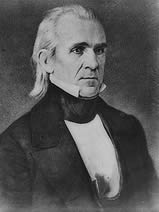
James K. Polk
President James K. Polk, a native North Carolinian, visited
Wilmington on his way home to Tennessee, just after his retirement
on March 7th, 1849. The town was decorated in his honor, and
upon his arrival was greeted with the ringing of bells and firing of
cannon. There was a grand public reception in the Masonic Hall
on Market Street, “where ladies and gentlemen of the town were
presented to him.”
Mr. Polk was also entertained at the now-famous house on the
southeast corner of Front and Dock Streets, the owner at this
time being Mrs. F.J. Swann. Polk left Wilmington by steamer
enroute to Charleston, and less than three months later had
died at his Tennessee home.
 |
Calhoun |
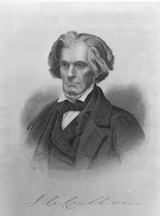
John C. Calhoun
When John C. Calhoun died in Washington on March 31, 1850,
the citizens of Wilmington were greatly stirred as that statesman
was regarded as the greatest defender of the Constitution and the
republic. The funeral party left Richmond April 23rd and passed
through Petersburg on the way to Wilmington. On April 24th, 1850,
the remains of Calhoun passed through this city on the way to
his final resting place in Charleston.
"The remains of the noble statesman left Washington on April 22,
from the eastern front of the capitol building for the wharf on
the Potomac where the steamer "Baltimore" was awaiting the
procession. The body was escorted to South Carolina by the
two sons of the deceased, the committee from Charleston,
the Senate escort composed of Senators James M. Mason
of Virginia; D.S. Dickinson of New York; J.H. Clark of
Rhode Island; Jefferson Davis of Mississippi; A.C. Dodge
of Iowa; John Berrien of Georgia; and others of distinction.
The steamer shrouded in mourning bore the funeral party
down the Potomac by Alexandria where flags on public
buildings were flying a half-mast, and on by "Mount Vernon"
to Acqui Creek landing where a special train was waiting to
take the procession through Fredericksburg and on to Richmond.
The funeral party left Richmond the next morning and passed
through Petersburg on the way to Wilmington, North Carolina,
to board the waiting steamer "Nina," which was to take them
to Charleston, South Carolina.
Wilmington sent a committee of prominent citizens to meet
the funeral train and escort the procession through the city.
Businessmen were requested to close their stores,
suspend all operations of business and to meet at the depot at
twelve o'clock.
There the procession was formed under the direction of the
Chief Marshal and served as an escort for the funeral party to
the foot of Market Street where the vessel for Charleston was
anchored. Twenty men from Wilmington and the officials of the
Wilmington and [Weldon] Railroad accompanied the party to
Charleston. Throughout the line of travel conveyences were
provided without charge; all who composed the escort
were always received as guests; free passage for the
whole party was tendered by the Wilmington and
[Weldon] Railroad and also the Steamship Company."
(John C. Calhoun, The Man, Harriet Cook)
Millard Fillmore
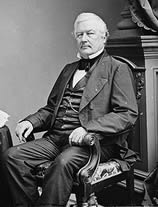
President Millard Fillmore was in Wilmington on the 12th of
May 1854, staying at Mr. Holmes’s hotel at the corner of
Market and Front Streets.
Edward Everett
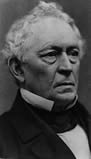
In the spring of 1859, the great Massachusetts orator
Edward Everett visited Wilmington. At Thalian Hall on April 12th,
he delivered his address “The Character of Washington,” a plea
for the continuation of the fraternal union of States, and to raise
funds for the Ladies Mount Vernon Association. Everett had
served in both the United States House of Representatives
and the Senate, as governor of Massachusetts, as
Secretary of State under Millard Fillmore, and president
of Harvard University. He was the vice presidential
candidate on the Constitutional Union ticket
in 1860 with John Bell.
Mr. Everett was introduced by George Davis, noted
Wilmington attorney and later Attorney General in President
Jefferson Davis’s cabinet. It was said that Everett mentioned
that at Wilmington alone, "he was introduced by an orator who
surpassed himself." The receipts from the lecture totaled nearly
$1100. Mr. Everett congratulated Wilmington for this unusual
generosity, and of his visit he later wrote: "Its population...
is intelligent, enterprising and rather more
than harmonious among themselves."
Everett as keynote speaker delivered a two-hour address
at Gettysburg in November 1863 after which Lincoln gave
his short address. Though the words of Lincoln's speech are
well known, Everett and William Seward "expressed their
disappointment and there was no applause." John Nicolay,
Lincoln's secretary said the later printed version of Lincoln's
speech "was revised" from the spoken version (Hudson).
Alexander H. Stephens
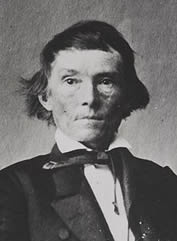
As mentioned above, Georgian Alexander H. Stephens
acompanied Henry Clay to Wilmington during the latter's visit in
April 1844. Both enjoyed a public banquet in the front yard
of John Walker’s home on Princess Street. Here Mr. Stephens
delivered an oration to assembled Wilmington
dignitaries and citizens.
Stephens returned to Wilmington in July 1861 as vice
president of the American Confederacy. A visiting soldier
of South Carolina's Edisto Rifles noted at that time: "To a casual
observer he would appear as a little insignificant individual, but upon
a close study of his face, one could not fail to be impressed with his masterful features. He had the finest eyes I ever saw."
 |
Jefferson Davis |
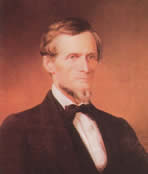
Previously mentioned, Jefferson Davis first passed through
Wilmington while accompanying the remains of John C. Calhoun
to Charleston. He would again visit the City as President in
May 1861 enroute from Montgomery, Alabama, the first capital
of the American Confederacy, to the new
capital in Richmond, Virginia.
Near the end of a 2750-mile inspection tour of Southern defenses
against invasion, President Davis arrived Wilmington from
Charlotte on January 4, 1863. While here, he addressed citizens
and assembled troops with an appeal for civilized warfare in
response to reports of Northern atrocities, stating:
“Soldiers, I charge you always to be kind to prisoners.
Fight the enemy with all the power God has given you, but
when he shall surrender remember that you are (gentlemen)
and treat him with courtesy and kindness. Never be humble
to the haughty, and never be haughty to the humble.”
He arrived in Richmond the following day.
In February 1863, Davis "dispatched his nephew and personal
aide Lieutenant John Taylor Wood to inspect the defenses of Wilmington" in response to the strengthening of the
Northern blockading fleet off the coast.
Davis later visited Wilmington on November 5, 1863 after being
escorted to the city by a delegation of citizens who met him in
Florence, South Carolina the day before. He arrived early in the
morning of the 5th and was received as a guest of General
William H.C. Whiting at his residence on the north side of
Market Street between Front and Second Streets. Upon his
reaching town, he was greeted with a salute from
Southerland’s Battery. President Davis was here to inspect
the defensive works for the protection of
the port of Wilmington.
At nine o’clock he appeared on the balcony of General Whiting’s
residence in response to the cheers of the assembled resdients.
After an introduction by William A. Wright of the Wilmington
bar, he delivered an address and complimented the town as
“the ancient and honored town of Wilmington,” stating that
he had given to Wilmington one of the best soldiers in the
army, General Whiting. He appealed to the people to stand
up for the Confederate cause and do their fullest duty,
giving them assurance of ultimate and glorious success.
After delivering his address, the streets
were made quiet and the President retired to his
quarters for some much needed rest.
Later in the day a regiment of soldiers were marched to Front
and Princess Streets where the President addressed them from
the Princess Street entrance of the Bank of the State of
North Carolina. The soldiers were under the command
of Colonel Edward D. Hall. The bands were playing, the horses
of the officers were prancing, and the whole scene
was inspiring to lovers of military display.
Accompanied by General Whiting the following day, the
President left Market Street Dock for the boat journey to
the tip of Federal Point below Fort Fisher, and rode on
horseback to the Mound Battery. Davis enjoyed the commanding
view from atop the towering battery as he surveyed the earthen
fortress flowing northward from the Mound.
Colonel William Lamb recorded:
“As soon as he reached the top, the sea-face guns
being manned for the purpose, gave him the Presidential
salute of twenty-one guns. We doubt whether many of
the forts in the South could claim the distinction
of having fired such a salute."
After returning to the city, Davis boarded the Wilmington & Weldon Railroad cars and departed for Richmond.
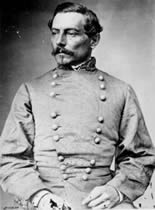
General P.G.T. Beauregard:
In April 1864, Confederate authorities deemed it necessary to
strengthen the forces defending Richmond and northern
North Carolina, and General Pierre G.T. Beauregard was
summoned from the defenses of Charleston. On April 21, 1864
he passed through Wilmington with alarge force on the way
to his new district command to the south and east
of Richmond. General Beauregard also stayed in Wilmington
while conducting an inspection tour of Cape Fear defenses
in early September 1864 at General Robert E. Lee's order,
and requested by Cape Fear District commander,
General William H. C. Whiting.
Bibliography:
The Book of Wilmington, A. J. Howell, Wilmington Printing Co., 1930
Admiral of the Amazon, David Werlich, University of Virginia, 1990
Lee and His Generals, Captain W. P. Snow, Gramercy Books, 1867/1996
Bloodstains, Volume 3, Howard Ray White, HRW Books, 2007
Diary of Nicholas W. Schenck, UNC Special Collections
The Wilmington Campaign, Chris Fonvielle, Savas, 1997
Chronicles of the Cape Fear, James Sprunt, Broadfoot Publ'g, 1916/1992 This Remote Part of the World, Wood, USC, 2004
Two Presidents, Tom Hudson, Naylor Company, 1973 War Sketch of the Edisot Rifles, Izlar, State Company, 1914
©2006 Cape Fear Historical Institute